Not Your Average Heroine: Why Anime's Female Leads Are the Role Models Gen Z Actually Wants
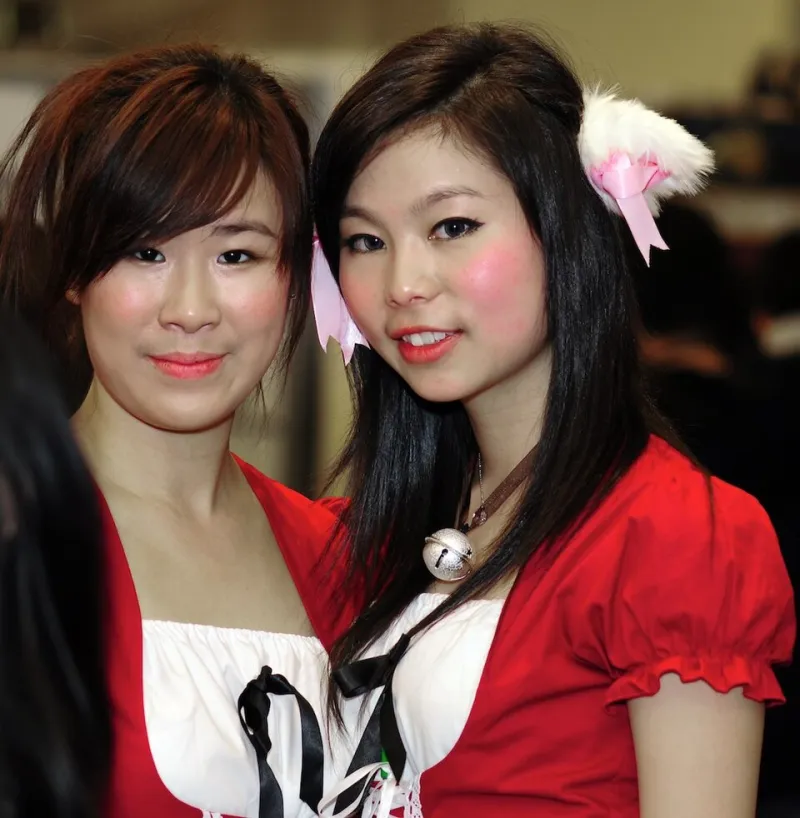
Photo: Indra Wirawan, CC BY-SA 2.0, via Wikimedia Commons
Something shifted in the way a generation of American girls started thinking about what it means to be strong. It didn't happen on a Marvel set or in a Disney writer's room. It happened in the glow of a laptop screen, somewhere between a Crunchyroll binge and a midnight TikTok spiral, where a purple-haired swordswoman or a soft-spoken girl with a hidden universe inside her chest quietly rewired what "aspirational" even means.
Anime's female protagonists have officially crossed over from niche fandom obsession into full-blown cultural touchstones. And Gen Z — especially young women — are leading that charge with a kind of devotion that goes way beyond casual viewership.
The Hollywood Heroine Problem Nobody Wanted to Say Out Loud
Western media has tried. It really has. The last decade gave us fierce female leads in blockbusters, prestige dramas, and YA adaptations. But somewhere in the execution, a pattern started to show: these women were strong in very specific, very palatable ways. Competent. Unflappable. Usually defined by how well they could keep it together in a world built by and for everyone else.
Gen Z noticed. Online discourse around characters like certain MCU heroines or dystopian YA leads often circles back to the same frustration — they feel engineered to be empowering rather than actually human. There's a polish to them that starts to feel like a cage.
Anime doesn't always play by those rules. And that gap? That's exactly where anime's female leads walked in and made themselves at home.
Complexity Over Competence: What Anime Actually Offers
Take Violet Evergarden from the series of the same name. She's not powerful in the conventional sense — she's a former child soldier trying to understand human emotion through the act of writing letters for other people. Her arc isn't about defeating a villain or saving the world. It's about learning what it means to feel, to grieve, and to exist beyond the function she was built for. American fans, particularly young women, connected with that in a way that's been hard to articulate but impossible to ignore.
Or consider Tohru Honda from Fruits Basket — a character whose defining trait is radical kindness in the face of her own quiet suffering. She's not a fighter. She doesn't have a destiny. She just chooses, over and over again, to love people who don't know how to be loved. That kind of emotional intelligence being framed as genuinely heroic? That's not something Hollywood leads typically get to embody without being coded as naive or weak.
Then there's the opposite end of the spectrum: Mikasa Ackerman from Attack on Titan, Maki Zenin from Jujutsu Kaisen, Erza Scarlet from Fairy Tail — women who are flat-out terrifying in a fight and don't need a male character's approval to validate their strength. They exist in their power without apology, without a romantic subplot that undercuts them, without the story constantly reminding you how remarkable it is that they're capable.
The "Mess" Factor — And Why It Matters
One of the things Gen Z consistently points to when talking about anime heroines is the permission to be unfinished. Characters like Nana Osaki from NANA, Ryuko Matoi from Kill la Kill, or even Usagi Tsukino — the original Sailor Moon — are allowed to be impulsive, emotionally volatile, deeply flawed, and still be the protagonist. Still be the one the story loves.
Usagi cries constantly. She's lazy, dramatic, and terrified. She also saves the world, repeatedly, through the sheer force of her emotional capacity. That framing — where emotional intensity is a feature, not a bug — resonates deeply with a generation that grew up being told to regulate, optimize, and perform wellness at all times.
There's something genuinely radical about a story that says: you can be a disaster and still be worth rooting for.
Fanbase Culture and the Identity Piece
The devotion Gen Z female fans feel toward these characters isn't just parasocial — it's identity-forming. Walk through any anime convention in the US and the cosplay breakdown tells its own story. Demon Slayer's Nezuko, Spy x Family's Yor Forger, Chainsaw Man's Makima — these aren't just popular costumes. They're statements. Fans aren't just dressing up; they're trying on a version of themselves.
That extends into online spaces, too. The way female anime fans talk about their favorite characters on Tumblr, Reddit, and TikTok reads less like stan culture and more like active analysis — unpacking what these women represent, why their particular flavor of strength or vulnerability lands, what it says about the stories we've been given versus the stories we actually want.
Franchises like Sailor Moon and Cardcaptor Sakura built this tradition decades ago, creating templates for magical girl storytelling where girls' emotions and relationships were treated as the actual point — not a distraction from the real plot. Modern series have inherited that framework and pushed it into new territory, giving us characters with more moral ambiguity, darker backstories, and wider emotional ranges than ever before.
What This Means for the Bigger Picture
None of this is to say anime is perfect on representation — it absolutely isn't, and plenty of series still rely on tired tropes or reduce female characters to supporting roles and fan service. That conversation is real and ongoing within the community.
But the best of what anime's female leads offer is something genuinely distinct: the sense that a woman's inner life is interesting enough to build an entire story around. That complexity isn't a liability. That strength can look like a hundred different things and still be strength.
For a generation that's been sold a fairly narrow version of what a heroine looks like, that's not a small thing. It's kind of everything.
And if the current trajectory holds — more US streaming investment in anime, more crossover mainstream attention, more Gen Z creators citing these characters as formative influences — the ripple effects on Western storytelling might be bigger than anyone's fully reckoned with yet. Hollywood's been taking notes on anime's plot structure and visual style. Maybe it's time to take a few notes on the women, too.