Two Screens, Zero Regrets: How Gen Z Turned Anime and Gaming Into the Ultimate Productivity Combo
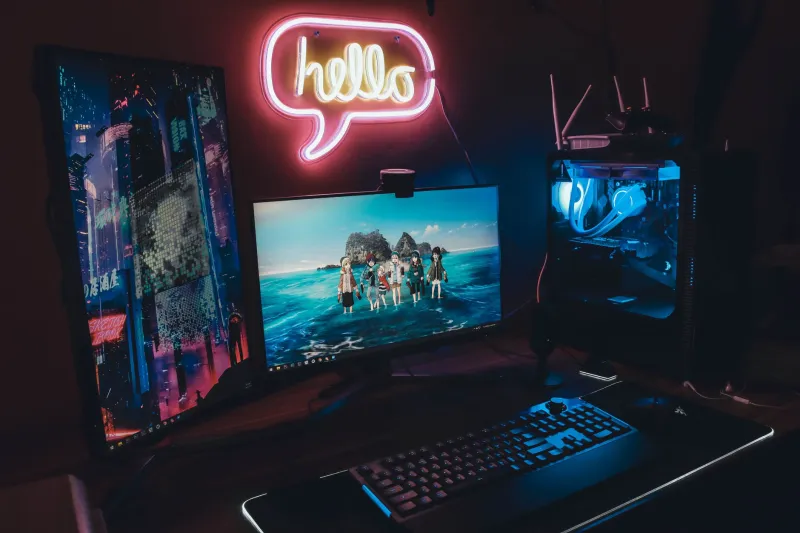
Ask any Gen Z gamer what's playing on their second monitor right now, and there's a solid chance the answer involves a ninja, a shonen protagonist mid-power-up, or at minimum, some extremely dramatic background music. The habit of running anime alongside a gaming session has become so normalized in certain corners of the internet that it barely registers as unusual anymore. But dig a little deeper and you'll find something genuinely interesting happening here — a generational rewiring of how people consume entertainment, and anime might be uniquely positioned to be the genre that benefits most.
The Setup: Why Two Screens at Once?
Multi-screen setups used to be the domain of day traders and tech bros. Now they're standard issue in dorm rooms and basement gaming dens across America. The logic is simple: gaming, especially during grinding phases, farming sessions, or repetitive side quests, doesn't always demand 100% of your mental bandwidth. There's leftover cognitive capacity just sitting there, and Gen Z — arguably the most media-saturated generation in history — has figured out how to fill it.
Anime slots into that gap surprisingly well. Unlike a prestige drama that punishes you for looking away for thirty seconds, a lot of anime operates with a rhythm that accommodates divided attention. Long reaction shots, expressive character animation, and dialogue-heavy scenes create natural breathing room. You can glance up, catch what's happening, and glance back down without feeling like you've missed a plot-critical moment.
Of course, that's not true for every anime — more on that in a second.
What the Brain Is Actually Doing
Neuroscientists have been studying media multitasking for years, and the findings are nuanced. The short version: your brain isn't actually processing two streams of information simultaneously. What it's doing is rapidly switching focus between inputs, which can feel seamless but does come with cognitive costs. Attention researchers have noted that tasks requiring similar types of processing — say, reading subtitles while also reading on-screen game text — create more interference than tasks that use different cognitive channels.
This is where anime has a subtle edge over other video content for the multitasking crowd. The visual storytelling in anime is often so expressive — through character design, color, and movement — that you can absorb a surprising amount of narrative context without relying heavily on dialogue. A character's face tells you whether the scene is tense, funny, or heartbreaking before a single word is spoken. For a gamer with one eye on the action, that's actually a useful feature.
Dub watchers have an even easier time, since listening to English dialogue while reading in-game text is less cognitively demanding than tracking subtitles. It's one of the more practical arguments for the dub experience that rarely gets brought up in the great sub vs. dub debate.
The Genres That Work (and the Ones That Don't)
Not all anime is created equal when it comes to second-screen friendliness, and fans have developed some pretty strong opinions about which series survive the split-attention treatment.
Shonen action series are generally considered the gold standard for background watching. Shows like Naruto, Black Clover, or Fairy Tail have long stretches of battle sequences where the emotional stakes are communicated visually. Miss a few minutes of a fight arc and you can usually catch up fast.
Slice-of-life and iyashikei anime — the cozy, low-stakes stuff like Laid-Back Camp or Yuru Camp — also work well. There's no complex plot to track, the pacing is gentle, and the vibe is essentially ambient. Fans describe these as the anime equivalent of lo-fi playlists: great for keeping the mood right without demanding full engagement.
Long-running episodic series with self-contained story beats per episode (think classic One Piece arcs or filler-heavy seasons) are also popular picks. Each episode functions almost like a short film with a clear beginning and end, so dipping in and out feels natural.
On the flip side, certain anime are widely considered second-screen killers — shows that will straight-up punish you for not paying attention. Steins;Gate, Neon Genesis Evangelion, Puella Magi Madoka Magica, and anything from the psychological thriller genre fall into this category. These are narratives where visual symbolism, rapid editing, and layered dialogue all carry meaning simultaneously. Look away at the wrong moment and you might miss the entire point of a scene. Fans treat these as sit-down, phone-face-down experiences.
The Content Creator Angle
Streamers and content creators have actually helped normalize this behavior at scale. Watch enough gaming streams on Twitch or YouTube and you'll notice anime playing on secondary monitors in the background, or streamers casually referencing episodes they watched during a long farming session. It's become part of the aesthetic — a signal of a certain kind of gamer identity that's deeply embedded in online culture.
Some creators have leaned into this fully, building their brand around the crossover. Reaction content that blends gaming and anime commentary has carved out its own niche. The communities around these creators tend to skew younger and treat the anime-while-gaming lifestyle as completely unremarkable — just the default way to spend an evening.
Is Anything Actually Lost?
Here's the honest part: yes, probably. Watching anime with divided attention almost certainly means missing details, subtle animation choices, and thematic layers that reward full focus. A lot of anime is genuinely crafted to be experienced as a complete artistic work, and treating it as background noise is a different relationship with the material.
But the counterargument that fans make is interesting: the second-screen approach often serves as a discovery mechanism. You catch a few episodes of something while gaming, get hooked, and then go back and rewatch it properly. It's less a replacement for genuine engagement and more like a low-commitment first date with a new series.
Given how overwhelming the anime catalog has become — with hundreds of new episodes dropping every single season — having a casual on-ramp into new shows isn't the worst thing in the world.
The Bigger Picture
What this whole phenomenon really reflects is how anime has evolved from a niche viewing experience requiring deliberate effort (tracking down fansubs, navigating import DVDs) into something woven seamlessly into the daily rhythms of American entertainment culture. It's background music. It's ambient company. It's the thing on the other monitor.
That's not a downgrade — it's a sign of just how thoroughly anime has embedded itself into Gen Z's everyday life. When something becomes casual enough to run in the background, that's when you know it's truly gone mainstream.