Pretty Boys, Big Impact: How Anime's Most Attractive Male Characters Are Rewriting Beauty Rules for Gen Z
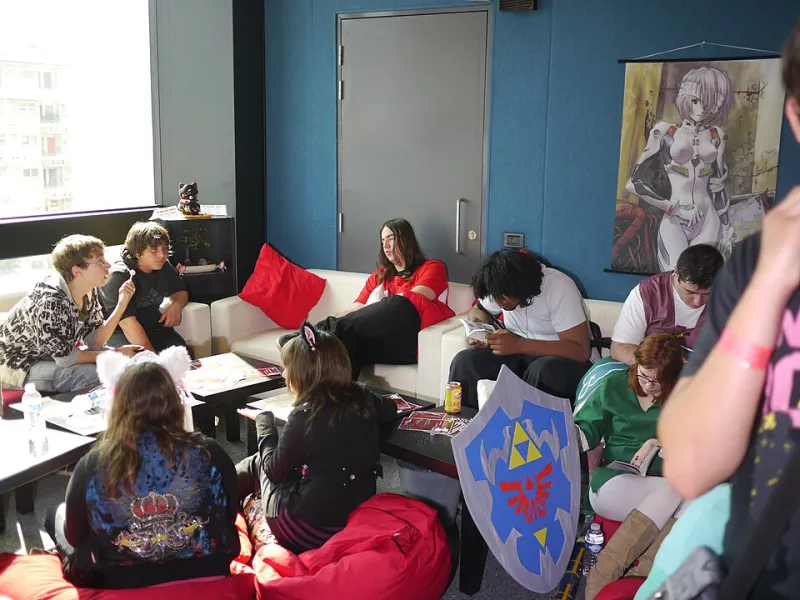
Photo: Yves Tennevin, CC BY-SA 3.0, via Wikimedia Commons
There's a moment that a lot of Gen Z anime fans describe almost identically. You're maybe thirteen, fourteen years old, deep into your first serious series — Demon Slayer, My Hero Academia, Fullmetal Alchemist: Brotherhood, take your pick. And somewhere between the fight scenes and the plot twists, you realize you find one of the male characters genuinely, confusingly attractive. Not in the way a Disney prince is handsome. Something more complicated than that.
That feeling has a name now, at least in fan spaces. Some call it the "anime guy effect." And whether you think it's harmless fandom enthusiasm or something worth examining more closely, one thing is hard to argue: the aesthetics of animated Japanese men are quietly reshaping how a generation of Western teens thinks about attractiveness, masculinity, and what's worth aspiring to.
What Makes the Anime Male Lead So... Different
Let's start with the obvious. The archetypal attractive anime male character looks nothing like the guys who typically dominate Western beauty and fashion marketing. Where American ads tend to push a very specific kind of rugged, broad-shouldered masculinity — think cologne commercials, superhero casting calls — anime offers something far more eclectic.
You've got the bishounen (pretty boy) aesthetic: lean builds, delicate facial features, expressive eyes, flowing or unconventionally styled hair. Characters like Yuri Katsuki from Yuri!!! on Ice, Levi Ackerman from Attack on Titan, or practically the entire cast of Haikyuu!! sit comfortably in this space. But anime male attractiveness doesn't stop there. There's also the brooding, scarred anti-hero (Zuko from Avatar doesn't count, but Itachi Uchiha absolutely does). The gentle giant. The nerdy strategist who turns out to be the most compelling person in the room. The villain whose cheekbones could cut glass.
The sheer variety is part of what makes this culturally interesting. These characters aren't all built from the same template.
The Psychology Behind the Parasocial Pull
Dr. Pamela Rutledge, a media psychologist who has written extensively on parasocial relationships, has noted that fictional characters — particularly animated ones — create a unique emotional environment. "Because they're not real, there's no social risk," she explained in a 2022 interview with Psychology Today. "Fans can project, explore, and feel things without the vulnerability that comes with real attraction. That can actually be a healthy rehearsal space for understanding your own emotional landscape."
For many teens, anime male characters are doing exactly that kind of work. Fan forums on Reddit and Tumblr are full of users describing how characters like Killua Zoldyck from Hunter x Hunter or Shouto Todoroki from My Hero Academia helped them figure out what emotional qualities they actually valued in people — sensitivity, loyalty, quiet intensity — as opposed to what they'd been told to find attractive by mainstream media.
That's a meaningful distinction. Western beauty marketing has historically told young men (and the people attracted to them) what masculinity should look like. Anime is more likely to make an argument about what it should feel like.
Fashion Fallout: From Screen to Street
The influence isn't staying abstract, either. Walk through any major American city's anime convention — Anime Expo in LA, Anime NYC, Katsucon in DC — and you'll see it in the cosplay, sure, but also in the everyday fashion choices of attendees who aren't even in costume.
Slimmer silhouettes. Layered streetwear that nods to Japanese fashion sensibilities. Statement hair colors that would've been considered fringe five years ago and are now practically mainstream among Gen Z. Skincare routines that prioritize the kind of clear, luminous skin that animators give their protagonists. Even the resurgence of earrings and nail polish among teenage boys in the US tracks, at least partially, with the normalization of those aesthetics through beloved male anime characters.
Brands have noticed. Collaborations between streetwear labels and anime franchises have exploded. Uniqlo's UT line does massive numbers with anime character collections. And smaller independent designers on platforms like Depop and Etsy are building entire businesses around anime-inspired menswear.
"My style is definitely influenced by anime," one 17-year-old from Chicago told us over DM. "Like, I started wearing more fitted stuff and caring about my skin because I thought characters like Megumi Fushiguro just looked cool. It wasn't about trying to look like a cartoon. It was more like... they showed me a version of looking good that felt like me."
The Flip Side: When Idealization Gets Complicated
It would be dishonest to frame all of this as uncomplicated progress. There's a real conversation to be had about the gap between animated ideals and human reality.
Anime male characters don't age, don't have bad skin days, don't carry the social awkwardness that real teenagers navigate. Their emotional depth is written by a team of professionals specifically designed to maximize your investment. When fans — particularly younger ones — start measuring real people against those benchmarks, the results can be genuinely harmful.
Some mental health researchers have flagged the rise of what they call "3D disappointment" — a phenomenon where prolonged immersion in idealized fictional relationships makes real human connection feel inadequate or unexciting by comparison. It's the same concern that's been raised about social media filters and unrealistic body standards, just applied to personality and emotional availability rather than physical appearance.
There's also a body image angle worth acknowledging. The lean, angular builds common to bishounen characters aren't universally achievable — or even universally healthy to pursue. For teenage boys already navigating complicated relationships with their bodies, having yet another idealized male form to compare themselves to isn't automatically a net positive.
Why This Feels Different From Old-School Celebrity Culture
Here's what keeps this conversation from being a simple "media is bad for teens" narrative, though: the diversity of the aesthetic itself.
When Brad Pitt was the defining image of male attractiveness in the '90s, the template was narrow. When anime fans are collectively losing it over characters as physically different as the stoic, compact Levi Ackerman, the lanky and awkward Tobio Kageyama, the scarred and emotionally guarded Zuko (yes, we're counting him), and the flamboyant, larger-than-life Viktor Nikiforov — that's a wider net. It makes room for more body types, more personality archetypes, more ways of being attractive.
Fans frequently cite this as one of the things they love most about anime male characters: the implicit argument that there isn't one right way to be appealing. That's genuinely countercultural in a media landscape that has historically been pretty rigid about this stuff.
So Where Does This Leave Us?
The anime guy effect is real, it's measurable in fashion trends and fan behavior and the way teens talk about attraction online, and it's not going away. The question isn't whether animated male characters are influencing Western beauty standards — they clearly are. The more useful question is how fans, parents, and the creators themselves engage with that influence thoughtfully.
For most fans, this seems to be playing out in genuinely positive ways: broader definitions of attractiveness, more permission to care about personal style, and a richer vocabulary for talking about what emotional qualities matter in the people they're drawn to. For some, the parasocial intensity and the gap between fiction and reality will need navigating carefully.
Either way, the pretty boys aren't going anywhere. And honestly? The conversation they're sparking is long overdue.