Dubs Are Having Their Moment — And Even Subtitle Die-Hards Are Starting to Notice
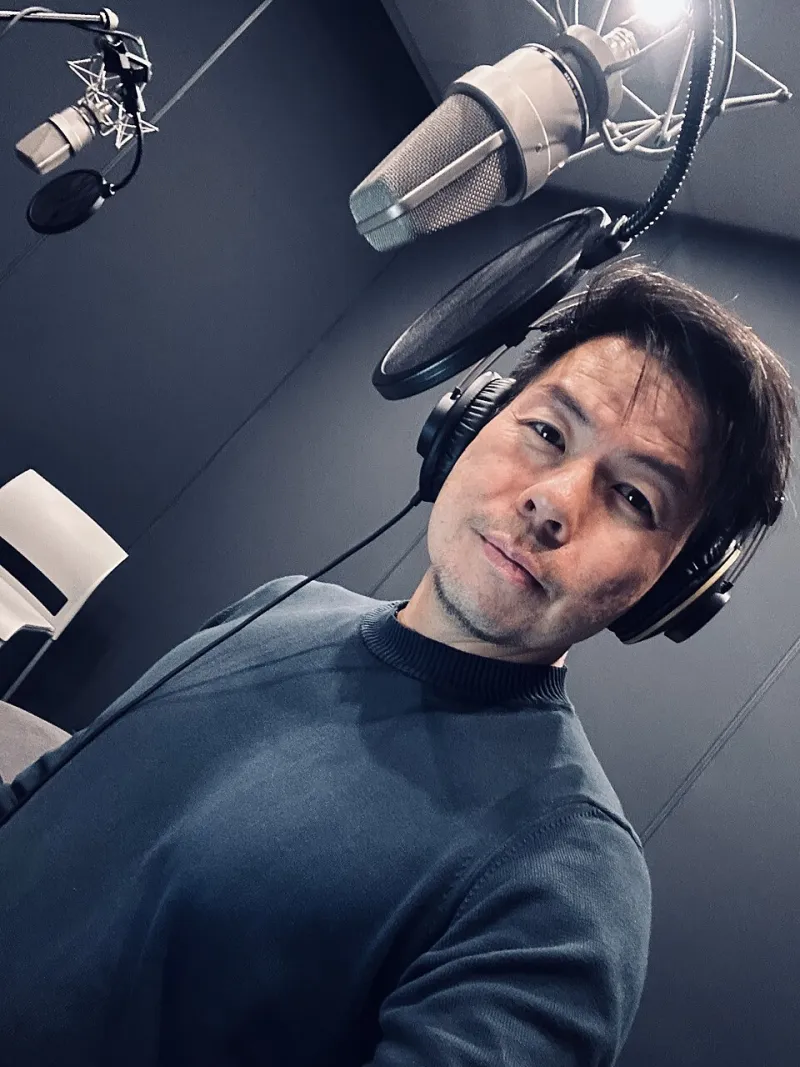
Photo: Voice Vt007, CC0, via Wikimedia Commons
Let's be real: if you've spent any time in anime fan spaces — Reddit threads, Discord servers, convention panels — you've witnessed the dub versus sub debate play out with the kind of passion usually reserved for sports rivalries. Sub fans have long held the cultural high ground, armed with arguments about authenticity, vocal nuance, and the idea that something essential gets lost in translation when you swap out Japanese voice actors for English ones.
And look, for a long time, those arguments had teeth. Early English dubs — especially from the late '90s and early 2000s — were, to put it charitably, inconsistent. Some were genuinely rough: flat deliveries, awkward localization choices, and scripts that seemed to be running on a different emotional frequency than the original. The meme of the bad anime dub exists for a reason.
But here's the thing: it's 2024, and that version of English dubbing is increasingly a relic. The industry has changed, the talent pool has deepened, and the results are starting to speak for themselves.
What Flipped the Script
The turning point didn't happen overnight. It was more like a slow accumulation of evidence that the English dubbing community had gotten genuinely good at what it does.
Funimation (now largely folded into Crunchyroll) deserves a lot of credit for pushing production quality upward over the years, but the real shift in perception came when high-profile, culturally massive shows started arriving with English casts that could actually hold their own. My Hero Academia is probably the clearest example. The show's English dub, featuring voice actors like Justin Briner as Deku and Christopher Sabat as All Might, built a fanbase that didn't feel like a consolation prize for people who couldn't keep up with subtitles — it felt like a legitimate alternative.
Sabat, a veteran of the industry whose credits include Vegeta in the Dragon Ball franchise, has spoken in interviews about how much the craft has evolved. The level of direction, the attention to emotional authenticity, the willingness to let performances breathe rather than just hitting lip-flap cues — all of it has matured significantly.
Then Demon Slayer happened, and the conversation shifted again.
Demon Slayer and the Big-Budget Benchmark
When Demon Slayer became a global phenomenon, Aniplex made sure the English dub matched the ambition of the production. The result was a cast — including Zach Aguilar as Tanjiro and Abby Trott as Nezuko — that brought genuine emotional weight to one of the most visually stunning anime ever made. Critics and fans who might have defaulted to subtitles found themselves genuinely impressed.
More importantly, Demon Slayer proved that English dubs could work for a new generation of viewers who discovered anime through streaming rather than through DVD rentals or late-night TV blocks. These viewers didn't carry the baggage of the bad-dub era. They came in without preconceptions, watched the dub because it was convenient, and had a great time. The old stigma simply didn't apply to them.
The Business Case for Better Dubs
Here's something that doesn't get talked about enough in fan circles: the financial logic behind investing in quality English dubbing is rock solid, and studios know it.
The US is one of the largest anime markets in the world. Crunchyroll has reported tens of millions of registered users in North America alone. A significant portion of that audience — particularly casual viewers and people new to anime — prefers dubbed content because it's more accessible. You can watch it while doing something else. You don't have to read. It's just easier.
When streaming platforms compete for subscribers, accessibility is a major differentiator. That's why Netflix has poured resources into dubbing its anime catalogue across multiple languages, not just English. And when studios see that a well-dubbed title performs significantly better in Western markets than a poorly dubbed one, the incentive to keep raising the bar becomes obvious.
Voice acting in anime is no longer a side gig for struggling actors between auditions. For many English-language voice actors, it's a serious career path with real craft attached to it.
The Talent Making It Happen
One of the most exciting developments in recent years is the emergence of a younger generation of English voice actors who grew up watching anime and bring genuine passion for the medium to their work. Actors like Erica Mendez (Retsuko in Aggretsuko, Retsuko in Aggretsuko), Cherami Leigh (Sailor Venus, Lucy Heartfilia), and Bryce Papenbrook (Eren Yeager, Kirito) have built devoted followings of their own — something that would have seemed unlikely in the era when dub actors were essentially anonymous.
Conventions like Anime Expo and Otakon now feature English voice actors as major draws, with panels and autograph sessions that fill up fast. The audience isn't just tolerating the dub cast — they're celebrating them.
What the Sub Side Gets Right (And Why the Debate Still Matters)
None of this means the sub camp is wrong about everything. There are real, legitimate reasons to prefer the original Japanese audio. Cultural specificity, tonal register, and the particular rhythms of Japanese performance style can be genuinely difficult to replicate in English. Some jokes don't translate. Some character voices feel more authentic in the original language. For certain series — particularly those deeply embedded in Japanese cultural context — the argument for subtitles remains strong.
And the debate itself, annoying as it can get, actually serves a purpose. It pushes both sides to be more thoughtful about what they value in an anime experience. Sub fans keep the industry honest about authenticity. Dub advocates push for accessibility and investment in English-language talent. The tension between those two positions has arguably made both better.
The Bottom Line
The dub-is-inferior orthodoxy that dominated anime fandom for so long is losing its grip — not because sub fans were wrong about the past, but because the present looks genuinely different. English dubbing has leveled up in ways that are hard to argue with when you're actually watching the results.
If you've been holding out on giving a dubbed series a real chance because of bad experiences ten or fifteen years ago, maybe it's time to revisit that call. Start with My Hero Academia. Give Demon Slayer a spin in English. You might be surprised how much has changed.
And if you still prefer subs? Totally valid. The point was never to pick a winner — it was to watch great anime. However you get there works just fine.