Right-to-Left and Totally Mainstream: How Manga Quietly Took Over American Bookstores

There was a time — not even that long ago — when asking a Barnes & Noble employee where the manga section was would get you a politely confused look and a vague wave toward the back of the store. Today? That same store might dedicate an entire wall, sometimes two, to manga volumes stacked spine-out like a colorful promise. Public libraries are reporting manga as some of their highest-circulation items. And publishers who once treated the format as a niche bet are now treating it like a cornerstone of their whole business strategy.
So what actually happened? How did a Japanese comic format that reads from right to left — the literal opposite of how Americans are taught to consume text — become one of the most normalized reading experiences in the country? The answer involves some savvy retail decisions, a generation raised on anime, and a fundamental rethinking of what counts as "real" reading.
The Retail Flip That Changed Everything
For years, American bookstores treated manga like a guest at the table — welcome, sure, but definitely not getting the good chair. Sections were small, inconsistent, and often shelved next to Western comics in a way that kind of missed the point entirely. That started shifting in the early 2010s, but the real acceleration happened post-2020.
Barnes & Noble, the last major brick-and-mortar book chain standing at scale in the US, made a pretty bold call: expand manga sections significantly and treat them like a dedicated category, not an afterthought. The results were hard to argue with. Manga became one of the fastest-growing segments in their physical retail sales, and it helped pull younger shoppers — a demographic that physical bookstores had basically written off — back through the doors.
Target and Walmart followed suit, giving manga prime shelf real estate rather than tucking it into a corner of the entertainment section. Even grocery store checkout aisles in some markets started stocking manga volumes alongside celebrity gossip magazines. At that point, you know a format has crossed a threshold.
Libraries Didn't See It Coming — But They're Glad It Did
Public libraries have quietly become one of the more interesting data points in this whole story. Librarians across the country started noticing, somewhere around 2018 to 2020, that their manga collections were getting destroyed — not literally, but in terms of wear and tear from constant circulation. Books that would normally last years on a shelf were coming back beat up and dog-eared after just a few checkout cycles.
The American Library Association has noted manga and graphic novels among the most-challenged and most-circulated materials in recent years, and individual library systems from New York to Los Angeles have publicly reported expanding their manga budgets specifically because demand kept outpacing supply. Some branches created dedicated manga corners, which became genuine gathering spots for teen readers — the kind of organic community space libraries have always wanted to foster but struggled to build with traditional formats.
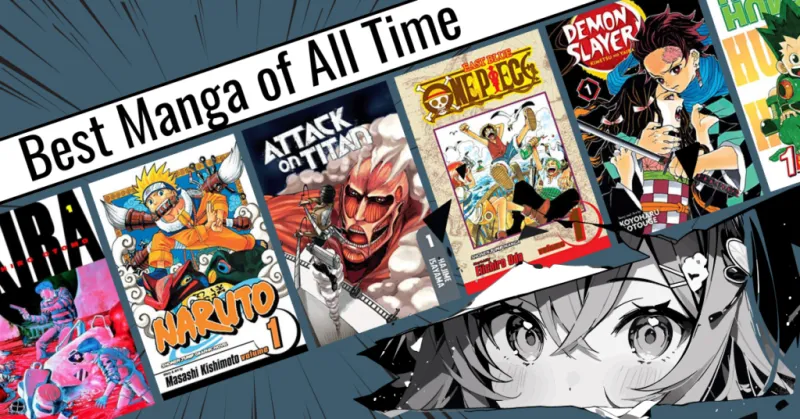
For a lot of kids, the library manga section became a gateway drug. They'd check out the first volume of My Hero Academia or Demon Slayer, blow through it in a day, and suddenly they're asking librarians for reading recommendations like seasoned regulars. That kind of engagement is gold for institutions that have spent decades trying to get young people through their doors.
The Localization Question: To Flip or Not to Flip
Here's where it gets genuinely interesting from a publishing standpoint. For years, American publishers "flipped" manga — mirroring the artwork so it read left to right, the way Western audiences were used to. It seemed logical. Less friction for new readers, right?
Turns out, readers hated it. Or at least, enough of them hated it loudly enough that publishers listened. Tokyopop made the call in the early 2000s to start releasing manga in its original right-to-left format, and the response from fans was overwhelmingly positive. Other publishers followed. The industry essentially decided to trust readers to adapt rather than watering down the product to meet a perceived limitation.
And adapt they did. The right-to-left format is now so normalized among manga readers that many of them find flipped editions genuinely uncomfortable to read. Publishers like Viz Media and Yen Press have built entire localization philosophies around preserving the original reading experience as much as possible — keeping honorifics, sound effects in Japanese with translations, and yes, the right-to-left page order. What once felt like a barrier to entry has become part of manga's identity in the American market, a feature rather than a bug.
It's Not Just Kids Anymore
One of the more underreported aspects of manga's retail surge is the age range of who's actually buying it. Yes, teenagers are a massive part of the market — shonen titles like Jujutsu Kaisen and One Piece consistently top sales charts, and those skew younger. But manga publishers have watched their adult reader demographics grow steadily, driven partly by millennials who grew up with early Toonami anime and are now rediscovering the source material, and partly by a broader cultural moment where reading manga as an adult carries zero social stigma.
Slice-of-life titles, josei manga aimed at adult women, and literary manga like A Silent Voice or Vagabond have found serious audiences among readers who might never have touched a superhero comic. The format's versatility — it covers horror, romance, sports, cooking, philosophy, you name it — means there's genuinely something for everyone, which is exactly the kind of breadth that sustains long-term retail relevance.
What This Says About American Reading Culture
The deeper story here isn't really about manga at all — it's about what American consumers have decided counts as legitimate reading. For a long time, there was an unspoken hierarchy: literary fiction at the top, genre fiction below that, comics somewhere near the bottom, and manga in whatever basement level exists below that. That hierarchy has been crumbling for years, and manga's mainstream retail rise is one of the clearest signs of its collapse.
When a format that requires learning a new directional reading pattern, engages with a foreign cultural context, and comes packaged in volumes rather than standalone books becomes a top-selling category at major retailers and libraries, something real has shifted in how Americans think about what's worth reading. The gatekeeping just doesn't have the same teeth it used to.
For manga fans who spent years defending their hobby to skeptical relatives or condescending English teachers, that shift probably feels long overdue. For everyone else, the shelves at your local bookstore are making the argument better than any think-piece could. Go check out what's there — and don't worry, there'll be a little guide on the first page that tells you exactly which direction to start.